
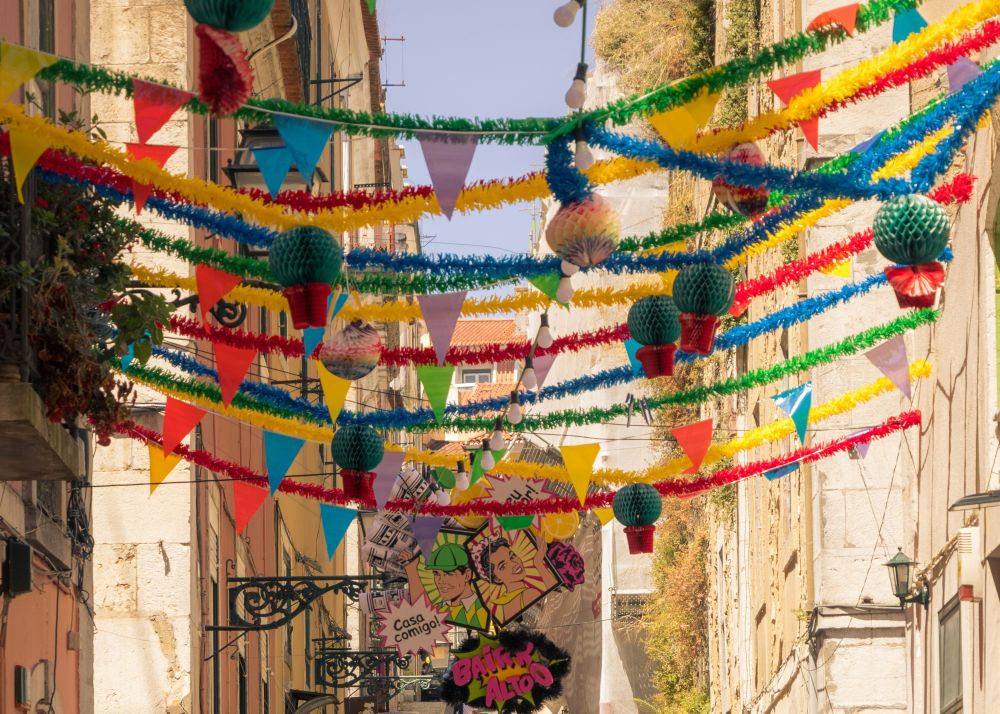
If you visit Portugal in June, you will quickly notice something unusual.
The streets are decorated with colourful paper garlands. The smell of grilled sardines drifts through the air. Music echoes late into the night. Neighbours gather around long tables, and people dance in the streets until sunrise.
Welcome to the Santos Populares, Portugal’s most vibrant and authentic celebration.
Throughout June, Portugal honours three Catholic saints, Santo António, São João, and São Pedro. While the festivals have religious origins, today they are a unique blend of faith, folklore, community, food, music, and centuries-old traditions.
For visitors, it is one of the best times of year to experience Portuguese culture beyond the monuments and tourist attractions.
What Are the Santos Populares?
The Santos Populares, or Popular Saints Festivals, are a series of celebrations held throughout June in honour of three saints:
- Santo António, celebrated on June 13
- São João, celebrated on June 24
- São Pedro, celebrated on June 29
Although these saints belong to the Christian calendar, many of the customs associated with the festivals are actually much older than Christianity. Historians believe many traditions originated from ancient pagan celebrations connected to the summer solstice, fertility, harvests, and the arrival of longer days.
When Christianity spread throughout the Iberian Peninsula, many of these older traditions became associated with the saints we celebrate today.
Santo António: Lisbon’s Matchmaker Saint
Date: June 13, 2026
Where: Lisbon
No city celebrates Santo António quite like Lisbon. Known as the patron saint of Lisbon, Santo António was born in the city in 1195 before becoming one of the most influential religious figures in the Catholic world. But among locals, he is famous for something else. He is known as the “matchmaker saint.” For generations, single people have prayed to Santo António in hopes of finding love.
One of Lisbon’s most famous traditions is the Casamentos de Santo António, where selected couples are married during mass wedding ceremonies sponsored by the city. This tradition dates back to the 1950s and remains one of the highlights of the celebrations.
On the night of June 12, Lisbon transforms completely. The city’s historic neighbourhoods come alive: Alfama, Graça, Mouraria and Bairro Alto. Get your energy up because thousands of people fill the streets for music, dancing, food, and celebrations that continue well into the early morning.
But without a doubt one of the biggest attractions is the Marchas Populares, colourful parades where neighbourhoods compete with elaborate costumes, choreography, music, and themes inspired by Portuguese culture. The Marchas run along Avenida da Liberdade in Lisbon. Put this on your bucket list, its a must!!
As you wander through the festivities, you’ll notice small pots of basil called manjericos everywhere. Attached to each plant is a small paper flower and a romantic poem. Traditionally, these are exchanged between couples as symbols of love and good fortune. Who will you be exchanging a pot of basil with this year?
Of course, no Santo António celebration would be complete without food. The unmistakable aroma of grilled sardines cooking over charcoal fills the city streets. Often served on a slice of broa, a traditional Portuguese cornbread, alongside roasted peppers and local wine, they have become one of the defining symbols of Lisbon in June. Delicious!!
São João: Portugal’s Wildest Party
Date: June 24, 2026 (Main celebrations take place on the night of June 23)
Where: Porto
If Santo António belongs to Lisbon, São João belongs to Porto. Many Portuguese people will tell you that São João is the biggest and most exciting festival in the country. And after experiencing it, it’s hard to disagree.
One of Portugal’s most famous traditions happens during São João. People walk through the streets carrying colourful plastic hammers and gently tap strangers on the head.
Yes…complete strangers.
And no one gets offended. In fact, it is considered good luck and part of the fun. Before plastic hammers became popular in the 1960s, people carried garlic flowers known as alho-porro and brushed them against each other’s faces.
On June 23, Porto becomes one giant street party. Crowds gather along the riverfront, in squares, and throughout the historic centre. Families and friends enjoy long dinners outdoors. The celebration reaches its peak at midnight. Right?? The peak?? The Portuguese know how to party.
No festival is complete without fireworks. At midnight, thousands gather along the banks of the Douro River to watch a spectacular fireworks display. And if that wasn’t enough there is a balloon tradition. It involves releasing illuminated hot air paper balloons into the night sky. Historically, these symbolised wishes, hopes, and prayers rising toward heaven.
Like every great Portuguese celebration, food sits at the heart of the festival. Grilled sardines once again take centre stage, joined by traditional dishes, local wine and plenty of opportunities to gather around a table with family and friends. For many Portuguese families, the meal itself is just as important as the celebration.
When the fireworks have faded and the last plastic hammer has been swung, you might think the festivities are over. But June still has one more saint to celebrate.
São Pedro: The Festival of Fishermen and Coastal Communities
Date: June 29, 2026
Where: Across Portugal
While Santo António and São João receive most international attention, São Pedro remains deeply important throughout Portugal. Saint Peter is considered the patron saint of fishermen. For this reason, many coastal towns celebrate him with particular enthusiasm.
Some of the most famous celebrations take place in: Póvoa de Varzim, Sintra, Évora and numerous fishing villages along the Portuguese coast. Each town adds its own local traditions and character.
If Santo António celebrates love and São João celebrates joy, São Pedro celebrates community. Many local festivals feature neighbourhood competitions, traditional music, dancing, and family gatherings that preserve customs passed down through generations.
Superstitions and Folk Beliefs
The Santos Populares are filled with fascinating folklore. As previously stated, giving someone a manjerico is said to bring good luck in romance. Traditionally, you should never smell the basil directly. Instead, you gently touch the leaves and then smell your hand. Young women once performed rituals on Santo António’s night hoping to dream about their future husband. Some would place specific objects under their pillow such a piece of paper with the name of their crush or a small Santo Antonio statue.
Many São João traditions originate from ancient midsummer rituals involving bonfires. Jumping over fires was believed to bring protection, health, fertility, and good fortune. Although less common today, the symbolism remains embedded in the festival.
Many Portuguese people still believe participating in the June festivities brings happiness and prosperity for the coming year. Whether taken seriously or not, the tradition continues.
Why Santos Populares Is One of the Best Times to Visit Portugal
Many travellers come to Portugal for the beaches, food, wine, and historic sites. But Santos Populares offers something deeper. It provides a glimpse into the soul of Portuguese culture. Whether you find yourself eating grilled sardines in Lisbon, celebrating with plastic hammers in Porto, or joining a local festival in a fishing village, June is one of the most unforgettable times of year to experience Portugal. And if someone gently taps you on the head with a plastic hammer in Porto, don’t be surprised. Just smile and join the party.
Viva os Santos Populares!