
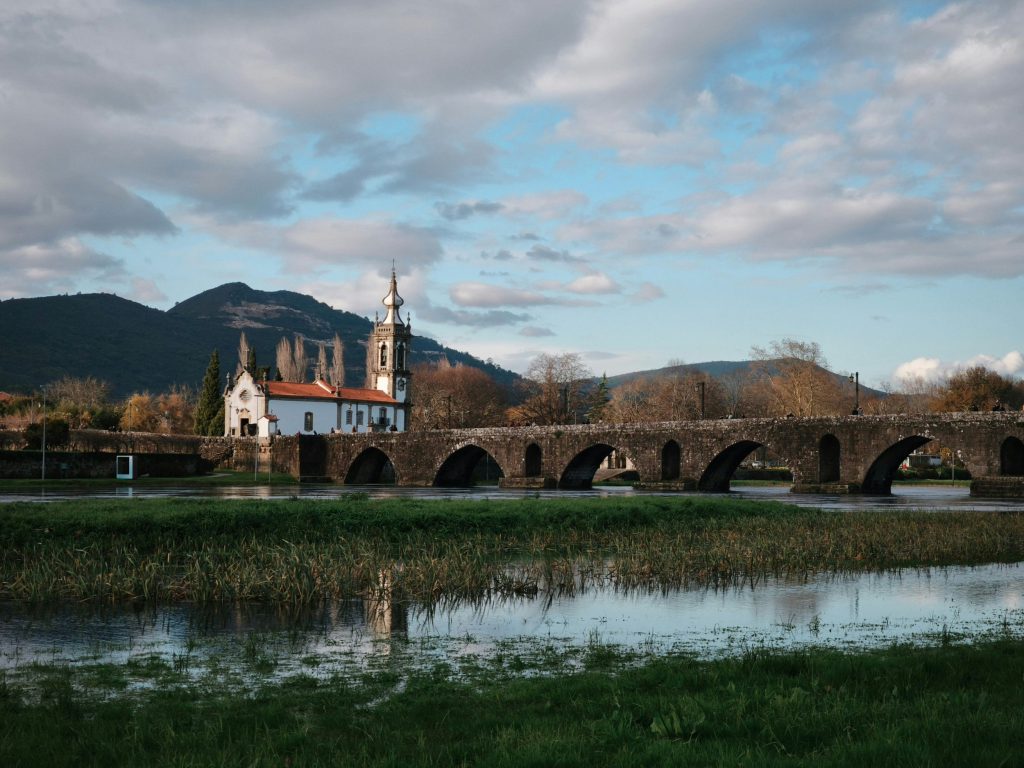
If you spend enough time in Portugal, eventually you stop hearing the church bells.
Not because they stop ringing, but because they become part of the landscape in the same way as tiled facades, swallows in summer, or the smell of wood smoke drifting through villages in winter.
Nine o’clock. Twelve o’clock. Three o’clock.
The bells ring across fishing towns, mountain villages, university cities and market squares. They echo through narrow streets and bounce off stone houses that have heard the same sound for generations.
Visitors notice them immediately. Locals rarely seem to notice them at all.
What surprises many people visiting Portugal for the first time is that almost every town, no matter how small, seems to have a church tower with a clock watching over the rooftops. Yet almost nobody ever appears to look at it.
Nobody standing outside the café glances up before ordering another coffee. The elderly men sitting on the bench in the square do not check the hour before continuing their conversation. The woman leaning out of her window to water her geraniums already knows exactly what time it is. The clock is there, but somehow it feels unnecessary.
For centuries, it was anything but.
Long before smartphones, wristwatches and kitchen microwaves blinking in the corner, the church clock was the heartbeat of the community. It marked the beginning of the workday and the end of it. It told farmers when to head to the fields, shopkeepers when to open their doors and families when it was time to gather around the table.
The bells announced weddings, funerals, celebrations and moments of grief. They warned of danger. They called people together. Time was not something carried in your pocket. Time belonged to the village. Perhaps that is why the church clock still feels so important in Portugal, even if very few people actually use it to tell the time anymore. It remains a quiet reminder of a different relationship with time. In many parts of the world, time feels personal. My schedule. My calendar. My appointments.
But in Portugal, especially outside the larger cities, time can still feel strangely communal.
The café owner knows when the lunchtime rush is coming without looking at a watch. Neighbours know when children will spill into the streets after school. Church bells drift through open windows while lunch stretches into coffee and conversation. Life moves, but rarely in a hurry. Many visitors struggle to explain why Portugal feels different from home. They talk about slower days, longer meals and conversations that seem to have nowhere urgent to be. Part of what they are feeling may be this quieter rhythm that still survives beneath modern life. The church clocks still stand above the squares not because Portugal needs them to tell the time, but because they remind us that communities once shared it.
And perhaps, in some small way, many places here still do.
So the next time you find yourself sitting in a Portuguese square and hear the church bell strike the hour, resist the urge to check your phone. Look around instead. The grandfather reading his newspaper heard it. The waiter carrying coffees heard it. The woman crossing the square with fresh bread under her arm heard it too. For a brief moment, all of you are living in exactly the same minute. That may be one of Portugal’s quietest traditions. And one of its most beautiful.
If you enjoy discovering the stories hidden in everyday Portuguese life, you may also enjoy:
Why Portugal’s Mediterranean Diet Became UNESCO Heritage
Blue Flag Beaches in Portugal: What the Bandeira Azul Really Means