
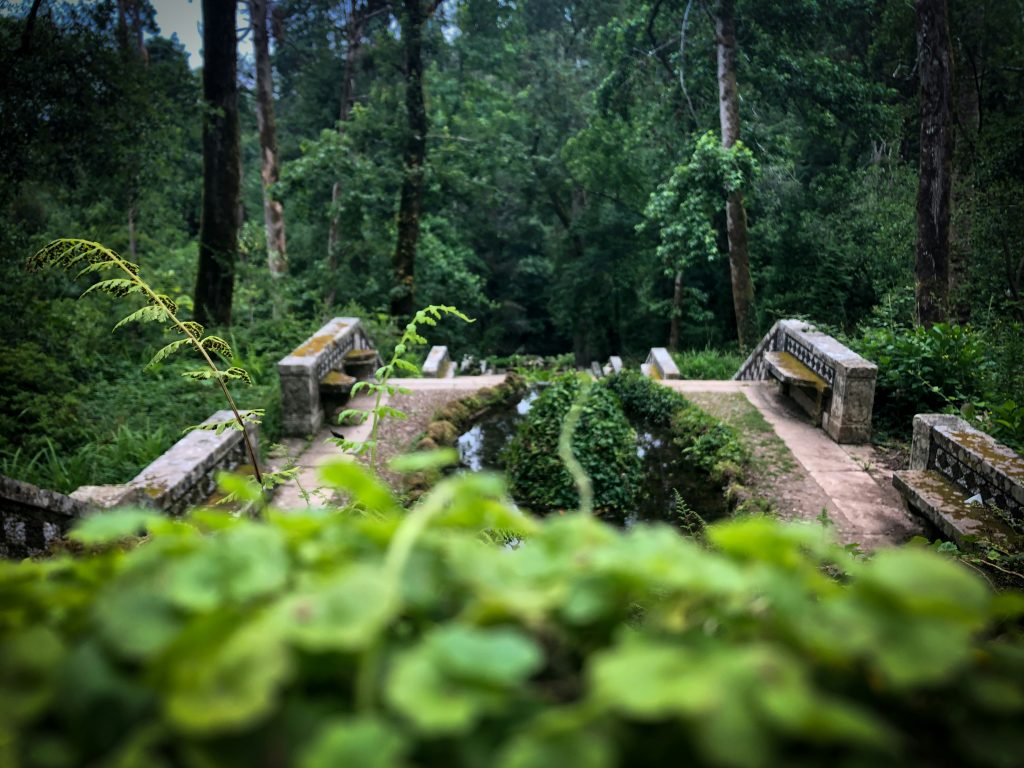
I’ve been thinking about the Carmelite monks who lived in Buçaco.
Not because of what they built, but because of the care they took to protect a forest they believed was worth preserving.
Centuries ago, long before anyone spoke about biodiversity, mental wellbeing or forest bathing, the Discalced Carmelite monks in Buçaco protected this forest with extraordinary care. They planted trees from distant parts of the world. They walked these paths in silence. They created rules that preserved this place long after they themselves were gone. I’ve caught myself wondering why. I wasn’t looking for the historical answer. I wanted the human one.
I don’t think it was because they knew people would one day call it therapeutic. That word didn’t exist. And I don’t think they imagined visitors from around the world wandering beneath the giant sequoias with cameras around their necks. Sometimes I wonder if they were planting trees for people they knew they would never meet.
So what was it? Maybe the answer begins with something we’ve all experienced.
Have you ever noticed that nobody rushes through a forest? Nobody consciously decides to slow down. It just happens.
The first few minutes are often the busiest. Your body is walking, but your mind is somewhere else. You’re replaying a conversation, thinking about tomorrow, wondering if you’ve replied to that message. Then, without really noticing when it happened, your thoughts begin to settle.
Not because the forest has changed, but because your attention has. You notice birds you weren’t listening to five minutes earlier. The scent of damp earth after rain. The sound your footsteps make on leaves. None of it is new. You simply become available to it.
I’ve never met anyone who came out of a forest wishing they’d spent less time there, which strikes me as odd because we regret spending too much time scrolling on our phones, or staying too long in meetings. We regret rushing through moments we later wish we’d appreciated. But I’ve never heard anyone say they regretted spending an afternoon beneath trees. Why is that?
Maybe that’s why I wasn’t surprised when I read that the Buçaco National Forest (Mata Nacional do Buçaco) had become the first forest on the Iberian Peninsula to receive certification as a therapeutic forest.
I smiled when I saw the news. Not because I thought the forest had suddenly become therapeutic. If anything, the recognition simply gave a name to something people had been experiencing long before it could be measured. Today, researchers continue to explore why forests have such a profound effect on our wellbeing. I can’t help but wonder if we’re simply finding words for something the monks already knew.
Maybe the monks understood something we’ve spent centuries forgetting. Human beings need places where nothing is expected of them. Places that don’t ask them to buy anything, or achieve anything, or even prove anything. Places where their value isn’t measured by how productive they are. A forest has never cared who you are. It doesn’t know what you do for a living, or how many emails are waiting for you. It doesn’t know whether you’ve had a successful week or a difficult one. And somehow, standing among trees that have no opinion of us feels strangely… liberating. Not because they fix us. Because they free us, if only for an hour, from the exhausting work of constantly being someone.
I’ve noticed something else. The places that stay with us are rarely the ones with the longest list of attractions. They’re the places where we quietly became a different version of ourselves. Not a better version, but a more present one. The version that notices, listens and remembers that life isn’t only measured by what we accomplish, but by what we experience.
I don’t know exactly what the monks believed as they walked through Buçaco hundreds of years ago. History can’t answer that.
But standing beneath those same trees today, it’s difficult not to wonder whether the monks understood a truth that feels surprisingly modern.
Some places are worth protecting not only because of what they contain, but because of what they make possible. Not just ancient trees or rare species, but something far more fragile.
A way of being human that’s becoming increasingly difficult to find.
Looking back, maybe the monks weren’t just guarding a forest. I think they were protecting the day someone else might walk beneath those same trees… and feel more like themselves than when they arrived.
Walk the Forest With Us
If the Buçaco National Forest has inspired you to explore this remarkable corner of Central Portugal, we’ve created two private experience that shares the forest at the same unhurried pace. Together, we’ll walk beneath its centuries old trees, uncover its history and discover why this extraordinary place continues to leave such a lasting impression on those who visit.
Private Day Experience
Buçaco Forest & Bairrada Wine Tour
Explore the forest’s history and discover one of Portugal’s most celebrated wine regions.
Multi-day Journey
The Portugal Reset
A 3 day journey through Central Portugal, created for travellers seeking space to reconnect with nature, culture, and themselves.