
For many travellers, Portugal begins in Lisbon and Porto.
And rightly so. Lisbon’s historic neighbourhoods, iconic trams, and sweeping viewpoints have captivated visitors for decades. Porto charms travellers with its riverside atmosphere, colourful architecture, and world-famous wine cellars. But ask many locals where the heart of Portugal truly lies, and you’ll often hear a different answer. It’s found somewhere between the two.
It’s found in Central Portugal.
This is the Portugal many visitors drive straight past on their way from Lisbon to Porto. Yet those who choose to slow down and explore often discover a side of the country that feels more authentic, more personal, and perhaps even more memorable.
Here, life moves at a gentler pace.
The roads wind through forests, vineyards, and rolling countryside. Medieval villages sit quietly on hilltops. Local cafés remain gathering places for the community rather than tourist attractions. The landscapes change constantly, yet somehow everything feels connected by a strong sense of tradition and identity.
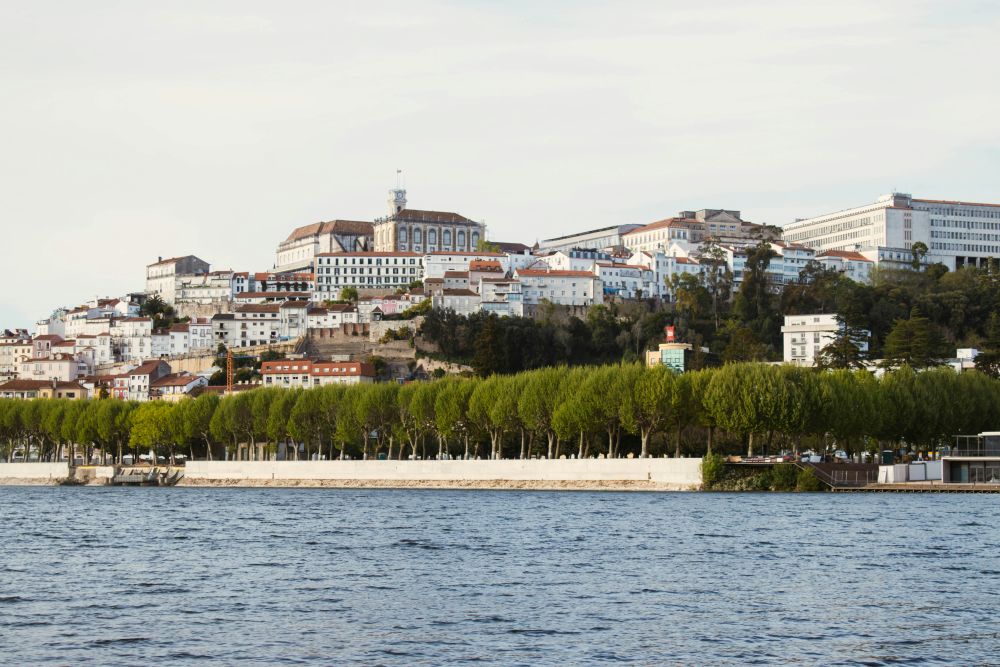
One of the first surprises for many visitors is Coimbra. Long before Lisbon became Portugal’s capital, Coimbra was the political heart of Portugal. From 1139 until 1255, it served as the capital of the young Portuguese kingdom, home to kings, queens and some of the most important decisions in the nation’s early history. Its strategic location along the Mondego River and its position between northern and southern Portugal helped establish Coimbra as a centre of power during the formative years of the country.
Today, Coimbra remains one of Portugal’s most important cultural and intellectual centres. At its heart stands the University of Coimbra, founded in 1290 by King Dinis. More than seven centuries later, it continues to operate, making it one of the oldest continuously functioning universities in Europe and among a select group of medieval universities that have shaped European education for generations. While empires have risen and fallen, the university has remained a place of learning, helping to educate scholars, scientists, writers and leaders from across Portugal and beyond.
Walking through Coimbra, you’ll quickly notice that the university is not simply part of the city, it is woven into its identity. Students wearing traditional black academic capes continue customs passed down through centuries, creating scenes that feel almost unchanged by time. From the historic university hill, sweeping views reveal red rooftops cascading towards the Mondego River below, while narrow streets and ancient buildings remind visitors that they are exploring one of Portugal’s most historically significant cities.
Yet even Coimbra is only the beginning of what Central Portugal has to offer.
Not far from Coimbra lies Aveiro, a city often associated with its colourful moliceiro boats and canals. Yet beyond the waterways, visitors discover elegant Art Nouveau buildings, local traditions, and a relaxed atmosphere that encourages exploration at a slower pace. It’s the kind of place where a simple afternoon stroll often becomes one of the most memorable moments of a trip.
A short drive away lies one of Portugal’s most enchanting places, the Bussaco Forest.
Stepping into Bussaco feels like entering another world. Towering trees from every corner of the globe stand alongside ancient pathways once walked by Carmelite monks. Hidden among the forest is the remarkable Bussaco Palace, a building so ornate and unexpected that many visitors struggle to believe it is real. It’s the kind of place that rarely appears on international travel itineraries but leaves a lasting impression on everyone who visits. Further inland, the mountains reveal another side of Central Portugal. Scattered across the landscape are villages built almost entirely from schist stone. Places like Piódão seem to emerge naturally from the mountainside, blending so perfectly with their surroundings that they appear to have grown from the rock itself. Life here has always been shaped by the land.
Beyond the schist villages rises Serra da Estrela, the highest mountain range in mainland Portugal and one of the country’s most spectacular natural landscapes. Imagine winding roads climb through dramatic scenery, traditional mountain villages and glacial valleys shaped thousands of years ago. In winter, snow transforms the peaks into a destination unlike anywhere else in Portugal, while throughout the year visitors come to experience the region’s hiking trails, breathtaking viewpoints and the famous Serra da Estrela cheese that has been produced here for generations.
For centuries, communities adapted to the rugged terrain, creating villages connected by narrow paths and surrounded by forests and terraced fields. Today, these villages offer travellers a glimpse into a Portugal that has preserved much of its traditional character. But the beauty of Central Portugal is not limited to its mountains.
Head west and eventually you’ll reach the Silver Coast, one of the country’s most underrated coastal regions. Unlike some of Portugal’s better-known beach destinations, the Silver Coast retains a strong connection to local life. Fishing traditions remain visible, family-run restaurants serve the catch of the day, and the coastline feels refreshingly unspoiled.
One of the region’s most remarkable spots is Foz do Arelho. It is where the Atlantic Ocean meets the Óbidos Lagoon, creating a landscape unlike anywhere else in Portugal. On one side, powerful Atlantic waves roll towards the shore. On the other, calm lagoon waters provide a peaceful setting for swimming, kayaking, and long walks along the waterfront. It’s the kind of place that feels like a local secret, even though it’s only a short distance from one of Portugal’s most famous towns. That town is Óbidos.
Encircled by medieval walls and cobbled streets, Óbidos often feels like stepping back in time. Whitewashed houses decorated with colourful flowers line narrow lanes, while small shops and cafés occupy buildings that have stood for centuries. Many visitors arrive expecting a beautiful village. What they discover is a place with a remarkable atmosphere, Central Portugal rewards travellers who resist the urge to rush.
It isn’t about one famous landmark or one must-see attraction. It’s about the feeling of discovery, finding a village festival you weren’t expecting. It’s stopping at a roadside restaurant because the parking lot is full of locals, wandering through streets without a plan and stumbling upon views that never make it into guidebooks. The region rewards curiosity. The more time you spend here, the more layers you uncover. You begin to understand why so many Portuguese people choose Central Portugal for their holidays. Why families return year after year. Why visitors who planned to stay for a day often end up staying much longer.
Continue Exploring Central Portugal
Reading about Central Portugal is one thing. Experiencing it is something else entirely. If this region has inspired your curiosity, explore our collection of guided day tours designed to help travellers discover Portugal beyond the usual tourist routes.
Whether you’re interested in history, culture, scenic landscapes or authentic local experiences, there’s no better way to uncover the stories that make Central Portugal so special.
Lisbon and Porto may introduce you to Portugal. But Central Portugal helps you understand it.