
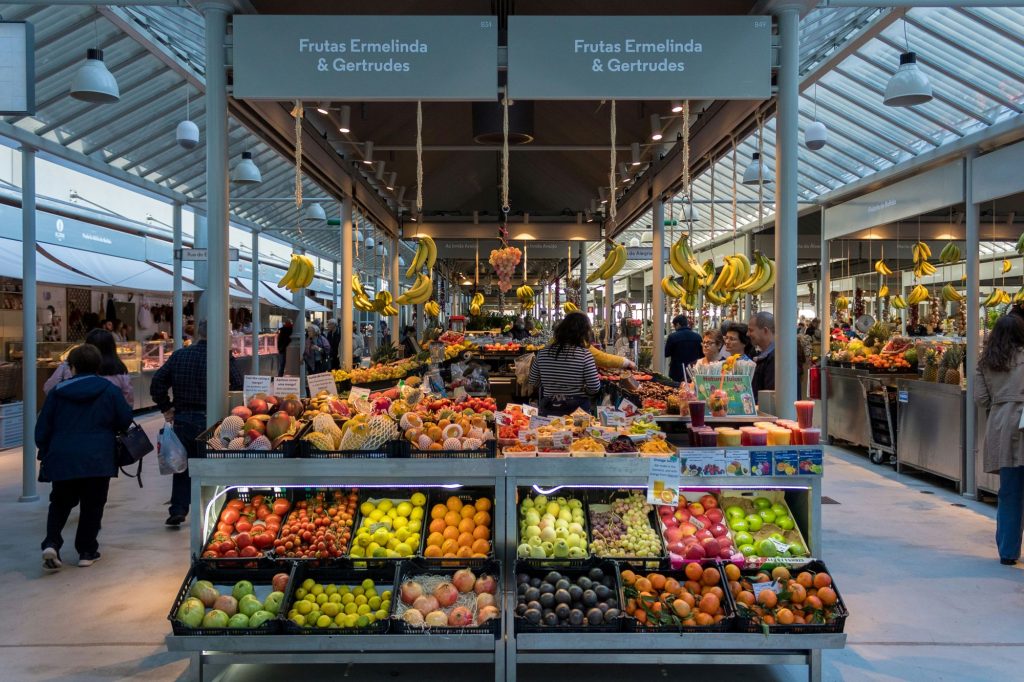
From spring strawberries and summer figs to autumn grapes and winter oranges, discover how the changing seasons make their way onto Portugal’s tables.
One of the easiest ways to experience a different side of Portugal is to pay attention to what is being sold at the local market.
Not the souvenirs. Not the postcards.
The fruit.
Walk through a Portuguese market in spring and you’ll see something different from what you’ll find in the middle of summer. By autumn, the colours and flavours change again, and winter brings its own seasonal favourites.
You don’t need to know much about agriculture to notice it. You simply have to look.
Portugal’s fruit seasons vary depending on the region and growing conditions, so there isn’t one strict calendar that applies everywhere. But there are some broad patterns worth knowing if you’re travelling through Portugal.
Spring
Spring is when the first signs of summer begin appearing in Portugal.
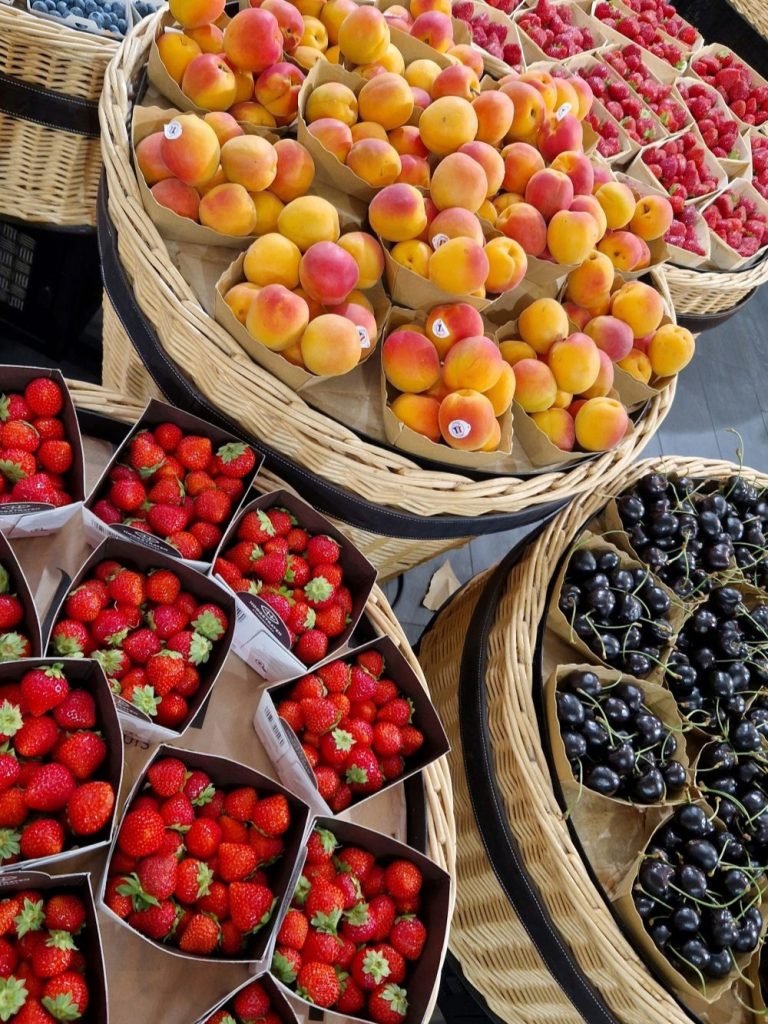
The markets begin to change as the days grow warmer. Strawberries, cherries, loquats and apricots start making an appearance, alongside fruits such as pears and apples that continue through other parts of the year.
This is a lovely time to wander through a local market or frutaria and simply see what has arrived. The colours become brighter, the selection begins to change, and you start to get a sense that the warmer months are on their way.
For travellers, it is also a good reminder that seasonal eating doesn’t have to be complicated. You don’t need to know exactly when every fruit is harvested. Look at what is being sold, ask what is local and in season, and try something you haven’t had before.
Summer
This is when Portugal’s fruit really comes alive.
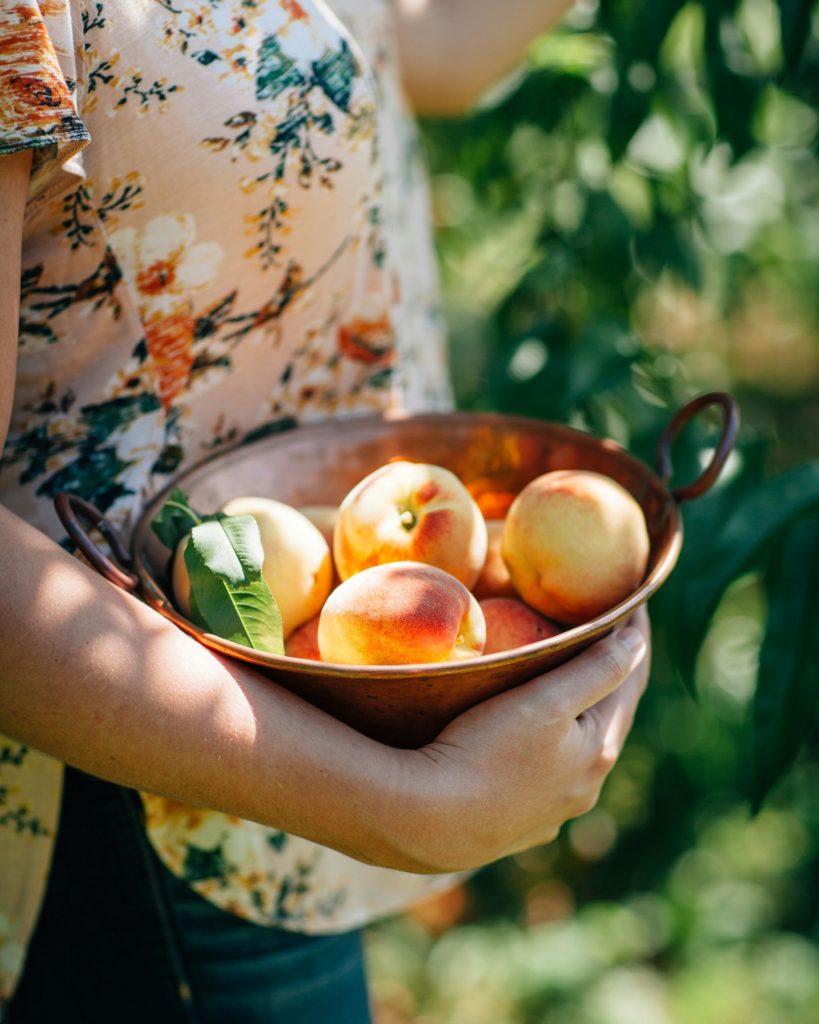
Peaches, nectarines, plums, figs, melons, watermelons and berries are among the fruits associated with the warmer months, filling markets and fruit stands with colour just when the days are at their longest.
Some fruits are closely connected to particular regions. Cova da Beira, for example, is known for peach production, while Portuguese plums are produced in areas including the Alentejo, Ribatejo and Cova da Beira.
Summer is also a wonderful time to notice how closely food and landscape are connected in Portugal. As you travel through the countryside, you begin to see orchards, fruit trees and agricultural land alongside the roads, giving you a glimpse of where some of the food appearing on local tables comes from.
And if you see fresh figs, try them. Their short season is part of what makes them special. There is something about eating a perfectly ripe fig in the warmth of a Portuguese summer that feels like the season itself has made its way onto your plate.
Autumn
As summer fades, the fruit changes with it.
Grapes, apples, pears, quince, pomegranates and persimmons become some of the fruits to look for. If you’re travelling through Portugal’s wine regions at this time of year, you may also notice the connection between the landscape and the harvest more clearly, as grapes make their way from the vineyards to the table and, eventually, into the country’s wines.
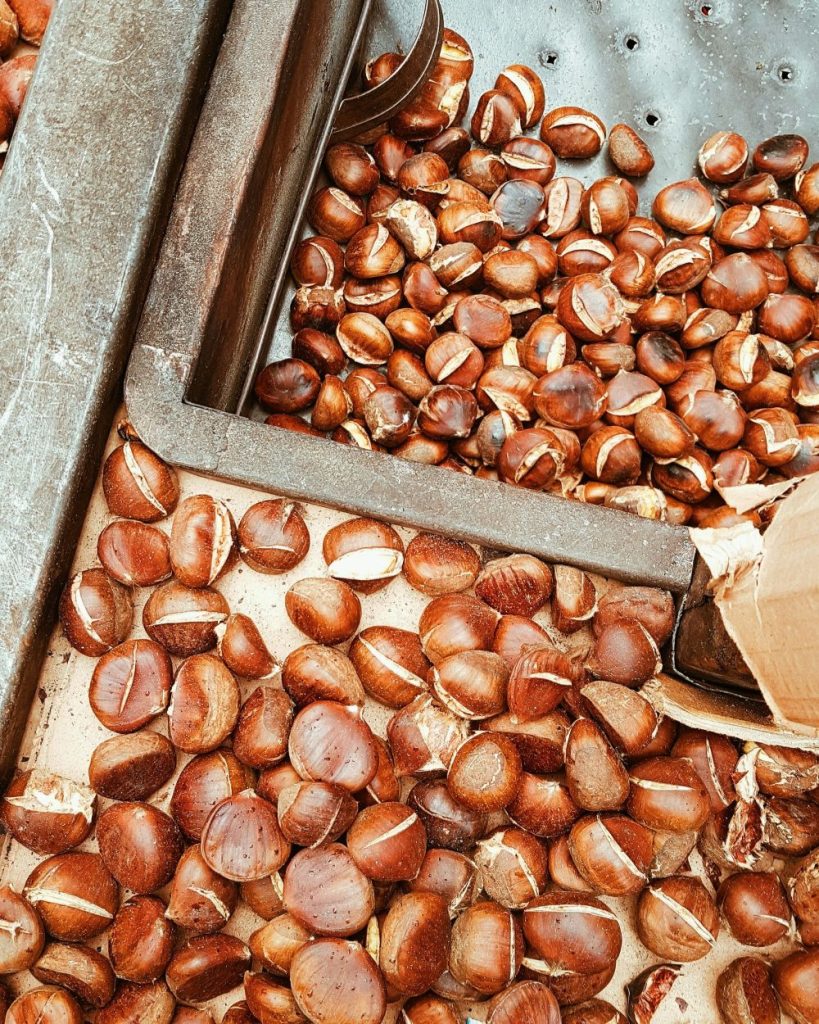
But autumn in Portugal brings another unmistakable seasonal tradition: chestnuts, or castanhas.
As the weather cools, the smell of chestnuts roasting over charcoal begins to fill the streets, particularly around São Martinho, celebrated in November. You may see vendors selling them in paper cones, ready to eat while they’re still warm.
Winter
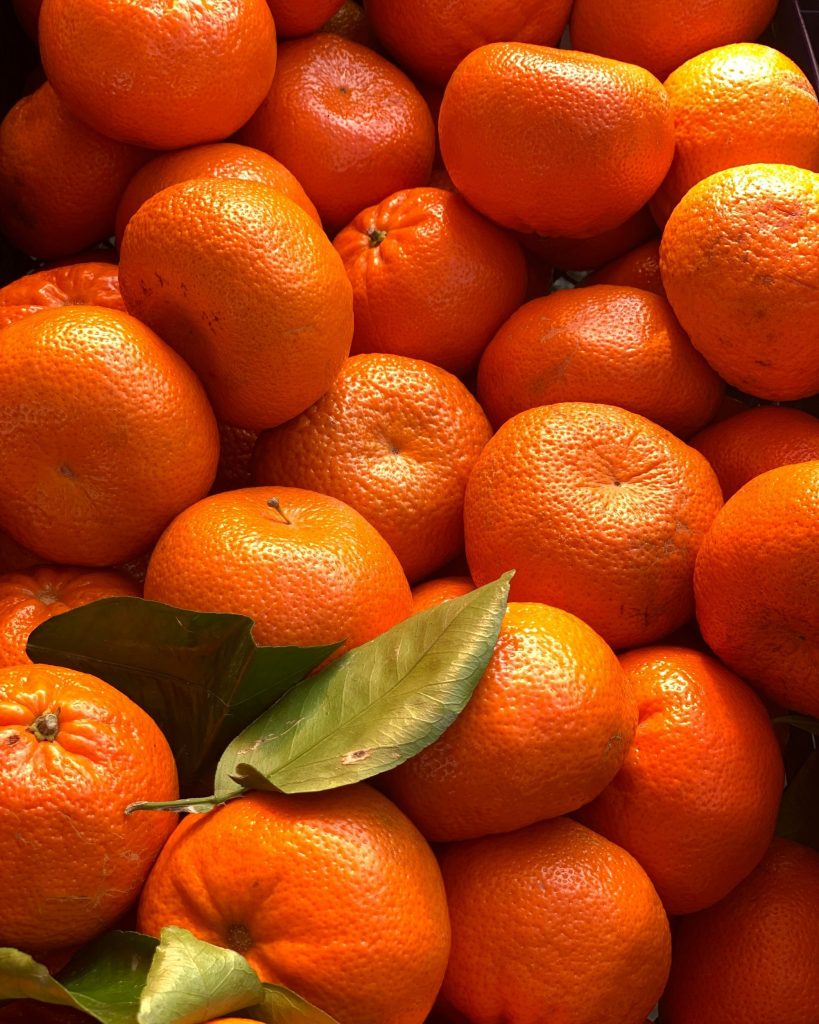
Portugal’s winter fruit has a different character.
As the days become cooler, citrus comes into its own. Look for oranges, tangerines and lemons, alongside kiwis, apples and pears that continue to be available through the colder months.
The Algarve is particularly associated with citrus production, and winter is a wonderful time to enjoy Portuguese oranges. In the markets, you may see them piled high, their bright colour standing out against the quieter tones of the season.
There is something wonderfully simple about eating an orange in Portugal in winter. Peel it, and the fresh citrus scent fills the air before you’ve even taken the first bite.
It is another small reminder that the seasons are not just something you see in the landscape. You can taste them, too.
A simple way to remember the seasons
Spring: strawberries, cherries, loquats, apricots
Summer: peaches, nectarines, plums, figs, melons, watermelons, berries
Autumn: grapes, apples, pears, pomegranates, persimmons
Winter: oranges, tangerines, lemons, kiwis
These are broad seasonal patterns rather than fixed dates. Many fruits can be found outside their traditional season because of imports, storage and controlled cultivation. If you’re looking specifically for Portuguese seasonal fruit, don’t just ask whether something is available. Ask where it was grown.
Visit a municipal market. Stop at a frutaria. Look at a roadside fruit stand. And if you see something you’ve never tried before, ask about it. You might discover that one of the simplest ways to experience Portugal is also one of the most delicious.
Because travelling isn’t only about seeing the places. Sometimes, it’s about noticing what is growing around you.
Want to Pick Your Own Cherries in Portugal?
If you’re visiting Portugal during cherry season, there’s another way to experience the season beyond simply buying them at a market.
We offer a private visit to a local quinta in the cherry-growing region of Cova da Beira, where you can walk among the cherry trees, pick cherries straight from the tree, eat them as you go, and take some home with you.
It’s a simple experience, but that’s exactly what makes it special. You’re not just tasting something that is in season. You’re stepping into the season itself.
Interested in experiencing cherry season in Portugal? Get in touch with us to ask about our private cherry-picking experience.