
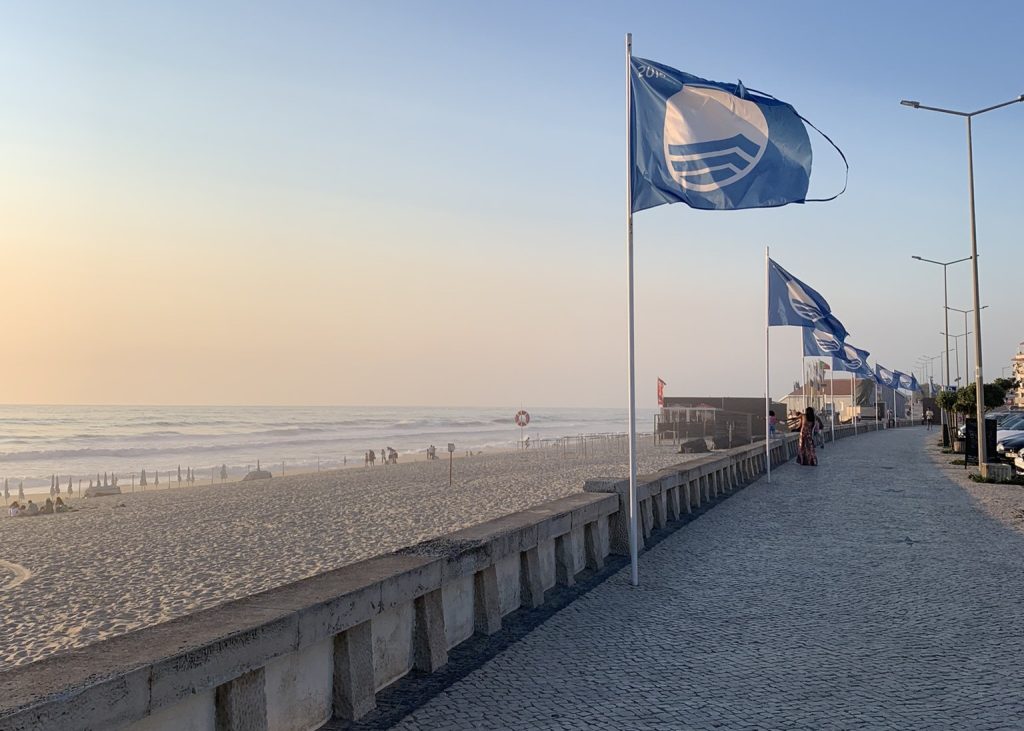
Discover what the Blue Flag (Bandeira Azul) means in Portugal, how beaches earn the award, and why Praia de Mira holds a unique world record.
If you spend any time exploring Portugal’s coastline in the summer, you will probably notice a blue flag flying proudly above many beaches. For locals, it is a familiar sight. For international visitors, however, it can easily go unnoticed. That blue flag is actually one of the most respected environmental awards in the world, and knowing what it means can help you choose cleaner, safer, and better managed beaches during your trip.
The Blue Flag, known in Portuguese as Bandeira Azul, is an international environmental certification awarded to beaches, marinas, sustainable boating operators and environmental education activities that meet strict standards for quality, safety, environmental management, and public information. It is managed globally by the Foundation for Environmental Education (FEE) and is recognised in dozens of countries around the world.
Unlike many tourism awards, the Blue Flag is not permanent. Beaches must apply every year and undergo regular inspections to maintain their status. If standards drop during the season, the award can be suspended or removed. In other words, a Blue Flag beach is not simply beautiful. It has been independently verified as meeting some of the highest environmental and safety standards in the world.
So you may ask, why does the Blue Flag matter?
For travellers, the Blue Flag acts as a shortcut to quality. When you see a Blue Flag flying at a beach, you can expect: excellent water quality, regular water testing, lifeguard supervision during the bathing season, clean facilities and proper waste management, environmental protection measures, accessibility improvements, public information about local ecosystems and beach conditions.
Many visitors assume that all beaches in Portugal offer the same standards. While Portugal is blessed with an incredible coastline, the Blue Flag provides an extra level of reassurance, particularly for families, first time visitors, and anyone unfamiliar with local conditions. The Blue Flag programme evaluates beaches across several categories, each designed to ensure a safe and sustainable visitor experience. Beaches must meet dozens of individual requirements before receiving certification.
- Water Quality
This is the most important requirement. Water is tested regularly throughout the bathing season and must achieve consistently high standards. Beaches with poor water quality cannot receive or keep the award.
- Safety and Services
Blue Flag beaches must provide: Appropriate lifeguard coverage, first aid equipment, emergency plans, clear safety information, safe access points.
- Environmental Management
A Blue Flag beach must be clean and well managed. Portugal’s dunes are particularly important because they help protect coastal ecosystems and prevent erosion. Visitors are often encouraged to use wooden boardwalks rather than walking directly on sensitive dune vegetation.
- Environmental Education
One aspect many visitors do not realise is that education forms a major part of the programme.
Blue Flag beaches must provide information about local wildlife, ecosystems, environmental challenges, and conservation efforts.The goal is not simply to protect beaches but to help people understand why they matter.
Portugal consistently ranks among the world’s leading countries for Blue Flag beaches, reflecting decades of investment in water quality, coastal protection, and sustainable tourism. Hundreds of Portuguese beaches receive the distinction every year, from the Algarve to the Azores.
When discussing the Blue Flag in Portugal, one beach deserves special attention: Praia de Mira. Located on the central coast between Aveiro and Figueira da Foz, Praia de Mira is not just another certified beach. It holds a remarkable distinction that few travellers know about.
Praia de Mira is the only beach in the world to have held the Blue Flag continuously since the programme began in 1987. In 2026, it celebrates an extraordinary 40 consecutive years of Blue Flag recognition. That means for four decades, Praia de Mira has consistently met the programme’s demanding standards without interruption. For local residents, this achievement is a source of immense pride. For visitors, it is a powerful indicator of the beach’s long standing commitment to environmental quality, safety, and sustainable management.
But Praia de Mira offers much more than an award.
The beach is known for its wide sandy shoreline, traditional fishing heritage, Atlantic scenery, and relaxed atmosphere. Unlike some of Portugal’s more crowded coastal destinations, Praia de Mira retains an authentic character that many travellers find refreshing.
As locals, we often take Portugal’s beaches for granted. Yet the Blue Flag reminds us that beautiful beaches do not stay beautiful by accident. They require investment, environmental stewardship, community effort, and ongoing care. So next time you see a blue flag waving above a Portuguese beach, take a moment to appreciate what it represents.
Behind that simple piece of fabric lies decades of work dedicated to protecting one of Portugal’s greatest treasures, its coastline.
Interested in learning more? Explore the official Blue Flag programme to discover how beaches earn this prestigious distinction, or visit the Municipality of Mira to learn more about one of Portugal’s most remarkable coastal communities.
Useful Resources:
Official Blue Flag Programme
Municipality of Mira
Continue Exploring Portuguese Culture and Traditions:
Learn about traditions, music, sardines, and street celebrations behind one of Portugal’s most cherished annual festivals.
Santos Populares in Portugal: The Ultimate guide to June’s most beloved festivals.