
Most visitors arrive in Portugal expecting to fall in love with the food.
And they usually do.
They remember grilled sardines eaten beside the Atlantic, seafood rice shared among friends, tomatoes that somehow taste more like tomatoes, and olive oil poured so generously it feels less like an ingredient and more like a national philosophy. They remember the tiny espresso that follows almost every meal and the bread that arrives at the table before they have even opened the menu.
But ask many travellers what they remember most about eating in Portugal and, surprisingly often, the answer isn’t the food at all.
It’s the time.
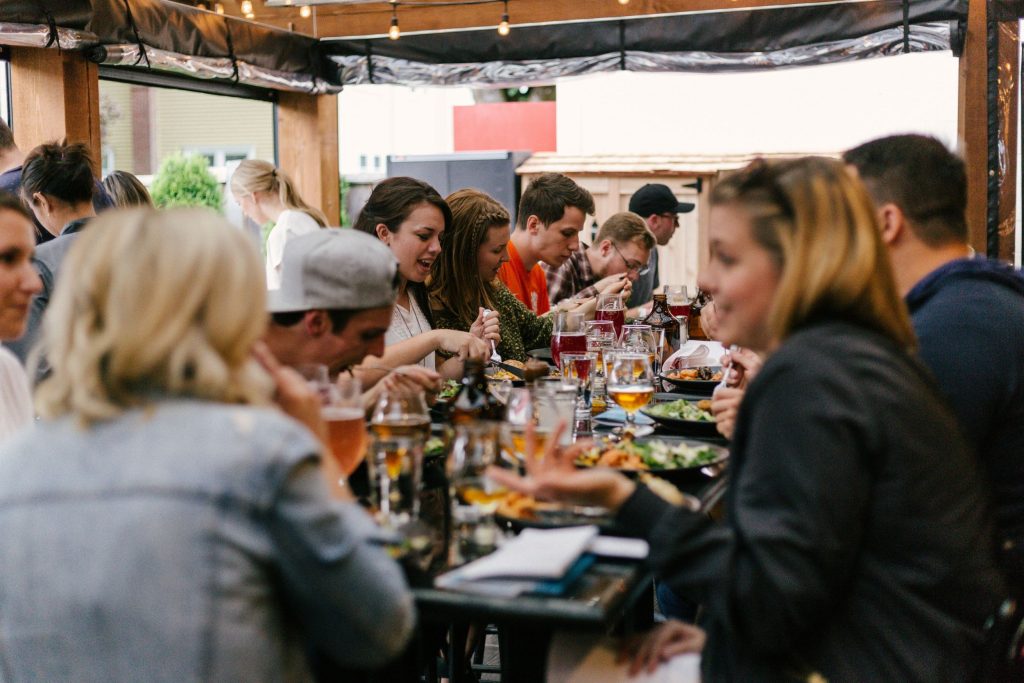
It’s the way lunch quietly stretches into the afternoon without anyone noticing. It’s the family at the neighbouring table who arrived shortly after you and somehow remain there long after you’re preparing to leave. It’s the realisation that nobody appears to be in a hurry for the bill.
After moving to Portugal, it was one of the first things I noticed myself.
In many countries, the end of the meal signals the beginning of the next activity. Plates are cleared, the bill appears and the table prepares for its next guests.
In Portugal, the meal ending often means something entirely different. It means the conversation is just beginning.
Across the country, from village cafés in the interior to restaurants overlooking fishing harbours, meals often continue long after the last plate has disappeared from the table.
At some point, the children drift outside to play while the adults remain where they are. Someone orders another coffee. Someone tells a story everyone has heard before and everyone listens anyway. Conversations move from football to politics to family news and somehow find their way back again.
Nobody seems to be waiting for the next part of the day to begin because, in many ways, this is the next part of the day. The gathering itself is the occasion.
“What many visitors don’t realise is that this idea is recognised far beyond Portugal itself.”
In 2013, Portugal became one of seven countries represented in UNESCO’s recognition of the Mediterranean Diet as Intangible Cultural Heritage of Humanity, alongside Cyprus, Croatia, Spain, Greece, Italy and Morocco. Perhaps even more surprising is that Portugal’s representative community is not Lisbon, Porto or even a city on the Mediterranean coast, but the Algarve town of Tavira on the Atlantic Ocean. The designation was never really about geography. It was about preserving a way of life. Most people assume this recognition exists because olive oil is healthy or because Mediterranean countries eat more fish and vegetables. But that isn’t really what UNESCO recognised at all.
The Mediterranean Diet was recognised because it represents a way of life.
It includes farming, fishing, local markets, seasonal ingredients, recipes passed between generations and knowledge shared around kitchen tables. But perhaps most importantly, it recognises the act of gathering together to eat. Eating together has never simply been about food. It is where families reconnect after busy days, where grandparents pass stories to grandchildren, where neighbours become friends and where hospitality takes its most familiar form.
In Portugal, food has never existed separately from the people sharing it.
It is no coincidence that Portuguese restaurants rarely bring the bill unless it is requested. In some countries this might feel like poor service. In Portugal, it often means exactly the opposite. The assumption is simple. If people are still talking, they probably want to stay.
And then comes the coffee.
The small espresso ordered after lunch or dinner is rarely just about caffeine. It arrives almost like punctuation between the meal that has finished and the conversation that follows.
Some of life’s most important conversations happen after dessert has already disappeared from the table. It’s here, somewhere between the empty plates and the final coffee, that plans are made, advice is exchanged and stories are told once again, despite everyone around the table already knowing how they end. Family histories are revisited, old memories resurface and ordinary afternoons quietly become part of the stories people will tell years later.
Perhaps this is one of the reasons visitors often leave Portugal feeling that life somehow moved differently here, even if they struggle to explain exactly why. Portugal certainly isn’t the only country that values food, family and hospitality. What it has managed to preserve, however, is something that many parts of the world have slowly lost.
The idea that time spent together is not time wasted and the conversations do not need a purpose. That a meal can be an event rather than an interruption between events. Portugal is famous for many things. Its extensive coastline, long history, wine and beautiful landscapes. But maybe one of its greatest cultural traditions is much quieter than all of those. The simple act of staying at the table just a little longer. This is the real secret behind the Mediterranean Diet. Not what is on the plate. But who is sitting around it.
Continue Exploring Portugal Beyond the Table
If this article sparked your curiosity, you can learn more about the Mediterranean Diet and its recognition as UNESCO Intangible Cultural Heritage through UNESCO official resources.
Further Reading:
UNESCO Official Site
Comissão Nacional da UNESCO
And if you’d like to discover the Portugal that exists beyond monuments and postcards, explore our private day tours designed to connect travellers with the people, traditions and stories that make Portugal unique.