
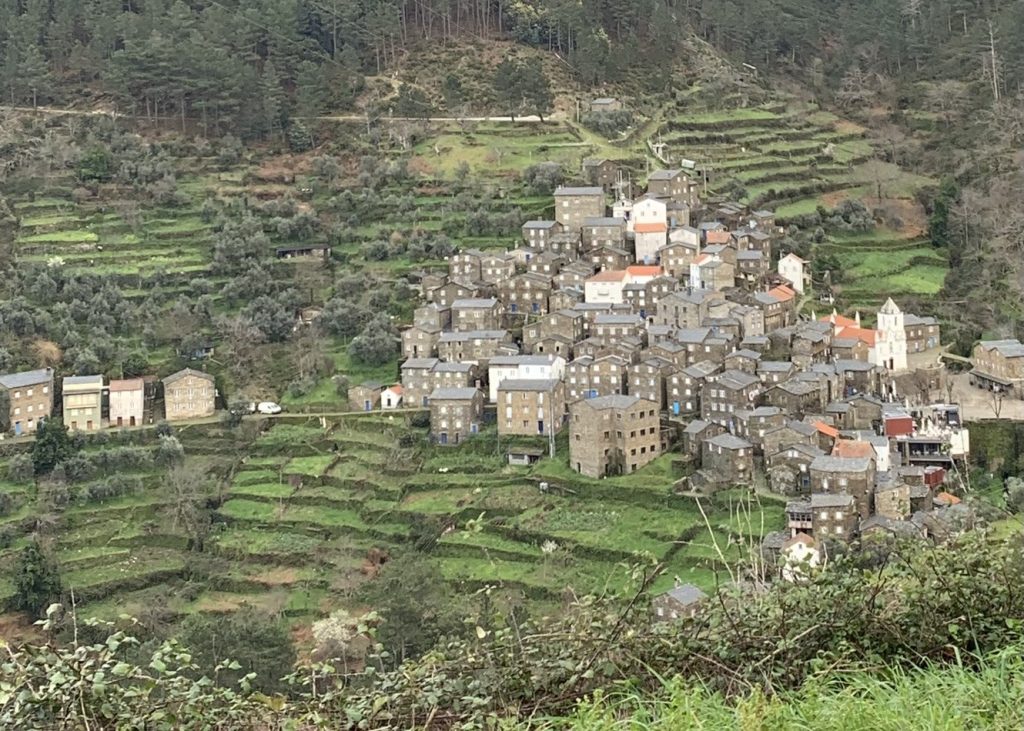
There is a temptation, when visiting Portugal’s Schist Villages for the first time, to think they were built this way on purpose. The narrow lanes, weathered stone walls and earthy colours feel almost too perfectly suited to the mountains around them, as though someone carefully designed them to create the picturesque villages we see today.
The truth is much simpler than that.
The Schist Villages were never built to be beautiful. They emerged because people needed somewhere to live, and they built with the material the landscape provided.
That material is schist, a metamorphic rock that lies beneath much of Central Portugal. Unlike regions where granite or limestone was readily available, the mountains of the Serra da Lousã, Serra do Açor and Serra da Estrela offered an abundance of schist. Long before building materials could be transported over long distances, people relied on what they could gather nearby. Walls, homes, ovens, terraces and even narrow footpaths were built from the same stone beneath their feet.
Much of that stone began forming around 300 million years ago, long before the first dinosaurs appeared on Earth. Every wall, path and doorway in the Schist Villages was built from rock that had already existed for hundreds of millions of years before the first person ever picked it up.
Looking at the villages today, it’s easy to forget that this wasn’t an architectural style. It was a practical solution. Modern architecture often begins with a drawing but these villages began with the landscape. The mountains determined the materials, the steep slopes influenced where homes could stand, and the climate shaped how they were built. Rather than reshaping nature, people learned to live within its limits.
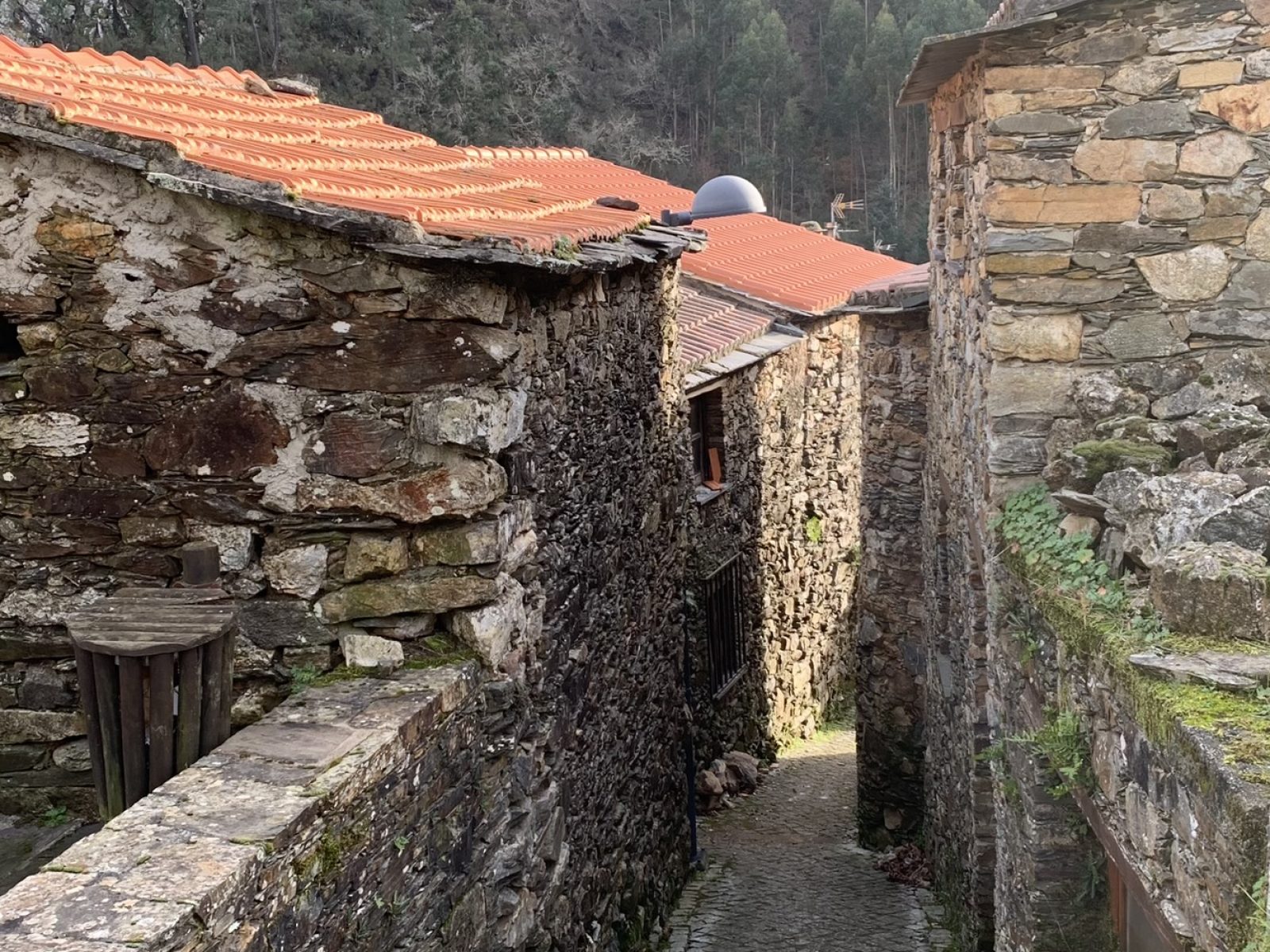
For centuries, these mountain communities supported themselves through farming, shepherding, beekeeping and forestry. Life was demanding. The land was beautiful, but it was rarely generous. Fields had to be carved into steep hillsides, harvests depended on the seasons, and villages remained isolated from larger towns for much of the year. Families lived with the rhythm of the landscape because they had little choice.
Then Portugal began to change.
During the twentieth century, new roads, industry and employment opportunities transformed the country. Younger generations left the mountains for cities such as Coimbra, Lisbon and Porto, while many others emigrated abroad in search of work. Like countless rural communities across Europe, the Schist Villages experienced a gradual decline. Schools closed as populations shrank, houses stood empty, and some villages were left with only a handful of permanent residents. Without regular maintenance, roofs collapsed, paths became overgrown and buildings slowly deteriorated.
For a time, it seemed some of these villages might eventually disappear. Instead, their story entered a new chapter.
In 2001, the Aldeias do Xisto project was established to help preserve and revitalise many of these historic communities. Working with local municipalities, residents and regional organisations, the project restored traditional buildings, improved infrastructure, created walking and cycling trails, supported local businesses and encouraged visitors to discover a part of Portugal that had been largely overlooked.
Today, the project brings together 27 Schist Villages across Central Portugal. Some are home to only a small number of permanent residents. Others have become centres for rural tourism, outdoor activities and traditional crafts. Yet despite their growing popularity, they have retained something that many restored destinations struggle to preserve: a sense that they still belong to the landscape that created them.
That may explain why people remember them so vividly.
Most of us spend our lives in places where the landscape has been reshaped to suit us. Roads cut through hills, rivers are redirected, forests are removed to make way for neighbourhoods and buildings often seem disconnected from the land beneath them.
The Schist Villages remind us that, for most of human history, people adapted to the landscape rather than expecting the landscape to adapt to them. There is something reassuring about seeing homes that feel as though they grew from the mountains instead of being placed upon them.
Yes, they are beautiful. Yes, they tell the story of rural Portugal and the communities that once depended on these mountains. But beyond their history lies something more universal. They allow us to imagine a way of living where homes were shaped not by convenience or fashion, but by necessity, resourcefulness and a close understanding of the world around us.
So, what are Portugal’s Schist Villages?
They are historic mountain communities shaped by the land they stand on and the people who refused to give up. Their stone houses tell the story of generations who built with what they had, adapted to a demanding landscape and created places that still feel deeply connected to their surroundings.
That is their real charm. The Schist Villages still seem to belong exactly where they are.
Continue exploring Portugal’s Schist Villages
If you’d like to experience the Schist Villages for yourself, explore our Schist Villages Tour, where we visit these remarkable communities and share the stories behind them.
For more information about the Aldeias do Xisto network, walking trails and the individual villages, visit the official Aldeias do Xisto website.